Archive : Article / Volume 2, Issue 3
- Research Article | DOI:
- https://doi.org/10.58489/2836-5070/011
Molecular Effect of Pollutants on Human Diversity in Pakistan
1,2,3Department of Zoology, Government College University Lahore- 54000 Pakistan,
4Institute of Microbiology and Molecular Genetics, University of the Punjab, Lahore-54000 Pakistan.
5Pakistan Academy of Family Physician, Pakistan.
Samreen Riaz, Institute of Microbiology and Molecular Genetics, University of the Punjab Lahore- 54000 Pakistan
Saima Shokat, Riffat Iqbal, Atif Yaqub, Samreen Riaz. Molecular Effect of Pollutants on Human Diversity in Pakistan. J. Obes. Fitness Manag. Vol. 2 Iss. 3. (2023) DOI: 10.58489/2836-5070/011
© 2023, Samreen Riaz, this is an open access article distributed under the Creative Commons Attribution License, which permits unrestricted use, distribution, and reproduction in any medium, provided the original work is properly cited.
- Received Date: 10-01-2023
- Accepted Date: 17-01-2023
- Published Date: 30-01-2023
Human diversity,Soil, Water, and Air,Posing a health risk.
Abstract
Environmental contamination and degradation have grown in importance as a non-traditional hazard to human diversity and security over the years, and it can now be considered an increasing threat to the environment and public health in Pakistan. A variety of toxins are constantly entering various environmental media (soil, water, and air) in Pakistan, posing a health risk. By studying the numerous causes of environmental degradation in Pakistan and exploring its impact on the various dimensions of human diversity, this review paper seeks to demonstrate a link between environmental contaminants and their impacts on human diversity in Pakistan. The data from secondary sources was analysed using qualitative methodology to evaluate the hypothesis that environmental deterioration is a new and unprecedented threat to Pakistan's human diversity and security. It reveals that sustainable development strategies can assist in addressing environmental degradation, which will have a good impact on Pakistan's human diversity. The data premise that environmental deterioration is a new and unprecedented threat to Pakistan's human diversity and security. This critical analysis shows that sustainable development strategies can assist in addressing environmental degradation, which will have a good influence on Pakistan's human diversity
Introduction
Pollution and environmental deterioration have a substantial influence on Pakistan's human growth and economic prosperity (Meo et al., 2021). Environmental deterioration cost the economy $25.1 billion in 2016 due to air pollution, water pollution, and soil contamination. Rapid population and industry growth, urbanization, inadequate management of existing natural resources, and a lack of state policy implementation are all contributing factors to the problem. Environmental deterioration has serious implications for human security and diversity, increasing the vulnerability of vulnerable populations that rely on natural resources (Aslam et al., 2021). Increased air, water, soil, and noise pollution are among anthropogenic causes of environmental deterioration in Pakistan (Amin et al., 2021; Aslam et al., 2021).
Noise Pollutants
Noise is a significant and challenging issue in metropolitan environments. It is classified as the most harmful pollution that persists over time. The scientific community is focusing on noise pollution studies because of the potential for harm to human health. It has an impact on the people who are exposed all over the world, and it is becoming more severe with the passage of time (Munir et al., 2021). Noise pollution has been shown to have negative impacts on the metabolic, neurological, respiratory, and cardiovascular systems (Münzel et al., 2021). Furthermore, noise has detrimental health impacts such as tinnitus or ringing in the ears (Pienkowski, 2021), frustration and sleep disturbance (Münzel et al., 2021), and negative emotions such as anger, anxiety, melancholy, and disappointment (Al-Taai, 2021) as shown in the Figure (2). Traffic has a significant negative impact on the physiological and psychological well-being of people who live in noisy places. Traffic and transportation operations (Munir et al., 2021), noise-generating devices, noise created by construction and building activity, factories (Al-Taai, 2021), and aeroplanes are all prominent causes of noise pollution in metropolitan environments (Farooqi et al., 2021) as shown in figure (3) Noise pollution has the greatest impact on the people of Lahore (Iqbal et al., 2021), Peshawar (Munir et al., 2021), Chiniot, Jhang (Farooqi et al., 2021), Karachi (Shareef & Hashmi, 2021), and Faisalabad (Saeed & Mahmood, 2021).

Figure 2: showing noise pollution hazards

Figure 3: indicating the causes of noise pollution
Water Pollutants
Water contamination has become one of Pakistan's most critical challenges as a result of industrialization and urbanization. Untreated sewage water from major cities including Karachi, Lahore, Faisalabad, Gujranwala, Sialkot, Sheikupura, and Kasur, as well as industrial chemical waste and excess agricultural drainage, contribute to the contamination of water bodies such as river, lake, & underwater reserves (Aslam et al., 2021) shown in figure (4 & 5). About 2M ton human waste, including toxic chemicals (industrial effluents such as alkalis, acids, and salts), untreated sewage, radioactive elements, and heavy metals, as well as solid muck, are contaminating rivers and seas in Pakistan (Iqbal et al., 2021). In Pakistan, fertilizer consumption is growing, and these fertilizers pollute groundwater and surface water at levels far exceeding WHO safety guidelines. Salinization (the presence of sodium and chloride ions in groundwater) affects large areas of Sindh, Punjab, Baluchistan, and Khyber Pakhtunkhwa (Masood et al., 2021; Parvaiz et al., 2021). Intestinal infections, bladder cancer, bone deformation, hepatitis, stomach ailments, and a variety of skin disorders are all caused by this contaminated water (Aslam et al., 2021) as shown in figure (6). In Pakistan, illegal pharmaceutical discharge pollutes the environment and leads to antibiotic resistance in a huge number of people due to antibiotic abuse or overuse. The ingestion of these antibiotics through the food chain endangers human cell function and gut microbiome (Sardar et al., 2021; Sulis et al., 2021).

Figure 4: showing Poor drainage causing groundwater contami- nation.

Figure 5: fertilizers contaminating the water bodies.

Figure 6: Effect of Heavy metals on human health by drinking con- taminated water
Soil Pollutants
Anthropogenic activities associated to industrial, agricultural, and urban growth have made soil susceptible (Abbas et al., 2021; El- Hamid et al., 2021). Soil contamination occurs when quantities of certain harmful compounds surpass that suggested for human, animal, or plant health (Islam et al., 2021). Contaminants' negative impact on soil could be linked to a decrease of biodiversity. Pesticide production to meet food and industrial demands has risen dramatically over the world, particularly in developing countries (Taufeeq et al., 2021). In South Asia, Pakistan is the second-largest pesticide consumer (Zulfiqar & Thapa, 2021). As a result of the widespread use of pesticides and the lack of effective regulatory mechanisms, environmental matrices have been greatly degraded, resulting in a variety of less toxic to chronic effects on living organisms, including endocrine disruptions, tumor production, carcinogenicity, and neurobehavioral disorders. Pesticide poisoning has affected almost half a million people in Pakistan (Dave et al., 2021; Taufeeq et al. 2021). Heavy metals are naturally occurring elements of the earth's crusts, while others are introduced to the soil through fertilizer application, where they enter crops and food chains. Because of their persistent, non-biodegradable, and poisonous character, heavy metal(loid)s is considered dangerous to living things. For example, high consumption of Pb, a non-essential metal for the human body, can result in skeletal, neurological, circulatory, endocrine, enzymatic, and immune system problems (Jehan et al.2021) as shown in figure (7 & 8).

Figure 7: showing main exposure pathways to soil pollution

Figure 8: Overview of soil contamination and human health im- pacts.
Air Pollutants
Pakistan is at number 3rd all over the world due to air pollution-related death rate, with PM2.5 aerosol mass concentrations frequently surpassing WHO standards for air quality (Bilal et al., 2021a). High number of various types, such as particulate matter (PM), ozone, nitrogen dioxide (NO2), volatile organic compounds (VOC), carbon monoxide (CO), and Sulphur dioxide (SO2), cause air pollution, all of which have negative health effects such as asthma, cardiovascular disease, and neurological disorder (Chen and Chen, 2021) shown in figure (9). Pakistan is burdened by air pollution, as it is one of the poorest and most populated countries in South Asia. Air pollution, according to existing emission control regulations, will reduce expected life 100 months in the year 2030. (Cicala et al., 2021). According to reports, all population of Pakistan is wide-open to PM 2.5 since 1990. Pakistan has mortality rate of 128,000 people dying each year due to air contamination (Ali et al., 2021). Lahore, Peshawar, Islamabad, and Karachi, in accordance with Pakistan Air Quality Initiative, are highly polluted areas in Pakistan, with air quality failing to exceed WHO criteria during the fall and winter months (Tainio et al., 2021). PM 2.5 concentrations in Lahore exceeded WHO and national air quality limits virtually every day in 2019. (Anjum et al. 2021). Outdoor air contamination has resulted in 22,000 early adult mortalities in Pakistan, according to World Health Organization (Ain et al., 2021).

Figure 9: Air Pollutants
Methodology
We did a scoping review from January 2021 till now, which included a quality evaluation (Levac et Al.,2010)
Eligibility Criteria
There were limitations on the study design, publication year, and study location. As the publication year is 2021 and study location is Pakistan. While the subject of study is human population of different cities of Pakistan. We preferred only those studies that were available in English language and were accessible online and free online research resources as provided by University of the Punjab Lahore. Only those articles were selected in which authors focused on different types of pollutants such as air pollutant, noise pollutant, water pollutant & soil pollutant, their mode of affecting the human diversity. It also included those studies in which comparative analysis were made among population diversity of different regions of Pakistan regarding the effect of different pollutants.
Search Plan
We used multiple databases for the identification of sources for article review in August 2021. To begin, we used Google Scholar to get a sense of what kinds of articles were available. We also searched the articles via other electronic databases. While considering the objective of this review article, each of the search terms used was selected for its correctness and interrelation. Sources were investigated in accordance with the number of standards. Firstly, it must be well- suited with the objective of the literature review on the basis of research questions in the paper. Then the sources focusing on secondary sources research were also considered. Thus, we gave greater importance to articles that focused on comparative analysis of pollutants on human diversity. We also searched the journals that would be characteristics of their respective fields such as Pakistan Journal of Earth and Sciences. We also evaluated the data after considering all of these parameters. We also looked at the references of pertinent research.
Study Screening & Selection
The flow chart below shows how reviews analyses are used to screen and select studies. After evaluating the literature, we deduplicated studies in EndNote (Clarivate Analytics). We independently reviewed the titles and abstracts of the retrieved publications and applied the inclusion criteria. We gathered the whole texts of papers that satisfied these criteria for this review. We were able to resolve differences in study inclusion by discussion and consultation with coauthors.
Charting the Data
We abstracted the key research outputs of each study and structured them in a chart using the headings: initial author and year of publication, kind of pollutant (Soil, water, noise, air), study design, targeted population and geographic location of study, and primary consequences.
Results
Pakistan's human security and variety have been harmed by environmental degradation. It has lowered people's quality of life and led to an increase in significant health problems among a variety of people in Pakistan's cities (Akmal & Jamil, 2021). National environmental quality regulations, according to the Environmental Protection Agency, limit traffic noise to 85 decibels (Chhachhar et al., 2021). Different noise pollution levels are listed in Table 1 for several cities in Pakistan, along with their possible sources, where noise levels were found to be higher than WHO and Environmental Protection Agency permitted limits (EPA).
|
Noise Pollu- tion Level
|
City
|
Major Sources
|
Possible Health Hazard
|
References
|
|
76.5 DB
|
Karachi
|
Airports, rickshaws, tankers,
industrial noise, traffic
|
Hearing problems, more cardiovascular diseases, negative psychological behaviors, headaches
|
(Chhachhar et al., 2021)
|
|
High than 70-
80 DB
|
Lahore
|
Autos like buses, trucks, traffic, rickshaws, airports, orange train construction, congestion
|
Hearing issues, High Blood Pressure, Sleep disturbances, Learning disabilities, High risk of heart diseases, stress, depression
|
(Younes et al., 2021)
|
|
72.5 DB
|
Islam- abad
|
Heavy traffic, airports
|
Non- auditory health related problems, psy- chological issues, headache
|
(Chhachhar et al., 2021)
|
|
82-100 DB
|
Faisala- bad
|
Industrial noise, traffic vehicles, rickshaws, transport vehicles, congestion
|
Hearing disabilities, increased risk of car- diovascular illnesses, negative behaviors, headache
|
(Saeed & Mahmood, 2021)
|
|
86 DB
|
Pesha- war
|
Traffic, congested areas, trans- portation vehicles, generators
|
Increased risk of cardiovascular diseases, annoyance, sleep disturbance
|
(Munir et al., 2021)
|
Table 1: Noise Levels in different cities of Pakistan along with their sources and health issues
The percentage of different populations affected with the exposure of water pollutants is given in table (2) along with thehuman health risks associated with water pollution.
|
Chemicals their sources & uses
|
Toxicity to humans
|
Health outcomes
|
|
|
|
Province (Popu- lation affected)
|
Major Cities
|
Potential Pollutants
|
Health Risks
|
References
|
|
Balochistan (72%)
|
Quetta, Khuzdar, Loralai
|
Antibiotic residues, microbial contamination, industrial/munic- ipal wastewater, heavy metals
|
Water-borne diseases, metal toxicity, allergies, body impair- ments, death
|
(Akhtar et,al. 2021; Zainab
et al., 2021)
|
|
Punjab (80%)
|
Lahore, Kasur, Faisalabad, Gu- jranwala, Bahawal- pur,Multan, Sialkot
|
Heavy Metals, Pharmaceuti- cals, trace metals (Li, Zn, etc) in groundwater, Microbial contami- nations, pesticides
|
Metal Toxicity, Water-borne illnesses, infant mortality, can- cer, hormonal disruption, Acidi- ty, impaired immunity, death
|
(Khan et al., 2021)
|
|
Sindh (24%)
|
Hyderabad, Kara- chi, Sukkur
|
Heavy metals, industrial waste- water, municipal waste, micro- bial contamination, antibiotic residues
|
Muscles cramps, Hepatic/ peptic disorders, Black foot disease, Urine infections, Acid- ity, Kidney stones, death
|
(Adnan &Hu- sain, 2021; Soomro et al., 2021)
|
|
KPK (46%)
|
Mardan, Pesha- war, Abbottabad, Mangora
|
Microbial contamination, Fluo- rides, agricultural runoff, heavy metals, mining waste
|
Impaired immune system, nervous/heart/renal disorders, endocrine disruption, toxicity, sterility, death
|
(Bhatti et al., 2021)
|
Table (2) Effects of water pollutants on different populations in the four provinces of Pakistan
Pesticides are used extensively in agricultural production, resulting in increased health risks and expenses, productivity loss, and environmental damage (Mehmood et al., 2021). Different chemicals are presented in table (3), along with how hazardous they are to human health and the health concerns they cause.
|
As Pesticides; Au, Pb, Cu, Ni, Fe and steel mining.
|
As rich water given to food crops
|
Gastroenteritis, skin/heart/liver and brain damage. Diabetes. Bone marrow and blood disorders. Cancer-causing
|
|
Asbestos Mining the raw asbestos for construction and production
|
Enters through inhalation, but also through ingestion or skin penetration
|
lung cancer
|
|
Cd Zn smelting, mining, burning coal or trash having cd, rechargeable batteries
|
through irrigation, it can accumulate in plants then enter the food chains
|
Hepatic and cardiac damage, low bone density.
|
|
Fluoride
|
Linked to high water fluoridation
|
osteosclerosis, calcification of tendons
and ligaments, bones deformities.
|
|
Lead Batteries, solder, ammunition, pigments, dyes, mining, burning of coal, water pipes.
|
fuel and mining are common sourc- es
|
Brain damage Low IQ and concentra- tion Bone deterioration Hypertension Kidney disease
|
|
Mercury Insecticides, medical waste, burning fuels.
|
directly ingesting soil by children
|
nervous and stomach disorders, im- paired brain, low IQ
|
|
Hazardous pesticides
|
Organic ones enter in the human food chains
|
Organic pesticides associated with a number of health issues
|
Table (3) Chemicals, their toxicity and the health outcomes associated with them
In terms of air pollutants, Fig. 1 shows the by-month fluctuations of 2003–2020 monthly mean PM1, PM2.5, and PM10 conc. for the highest ten polluted cities. Similar patterns for PM2.5 and PM10 are only seen from Sep-Apr, while different forms owing to magnitude differences are visible from May to August.

Figure 1: Monthly average changes in PM1, PM2.5, and PM10 conc
Figure (1) Monthly average changes in PM1, PM2.5, and PM10 conc. in the highest ten polluted cities over a 10-year period (2003–2020). (See legend). Cities are ranked in order of how filthy they are, from the most polluted to the least polluted (Bilal et al., 2021b). Pollutant concentrations were measured at various time periods in several Pakistani cities. As stated in Table (4), the primary sources of pollution were also identified.
|
Location
|
Interval of monitor- ing
|
Specie above standards of WHO
|
The primary cause of pollution
|
Maximum pollutant conc. sites
|
|
Lahore, Islamabad
|
April to May 2000
|
PM10, NOx
|
Ox more than standard
|
Information available
|
|
Lahore
|
Feb to March 2006
|
PM2.5
|
Vehicular and industrial discharges
|
Johar town, Lahore.
|
|
Lahore
|
12 Jan 2007 to
19Jan 2008
|
PM10 and PM2.5
|
Coal combustion, bio- mass burning
|
UET, Lahore.
|
|
Rawalpindi, Islamabad
|
March to June 2010
|
NO2
|
Vehicular discharges
|
Islamabad Airport
|
|
Faisalabad
|
Jan to Dec 2013
|
PM2.5
|
Vehicle’s emissions
|
Station Chowk
|
|
Karachi
|
Aug 2008 to Aug
2009
|
PM2.5
|
biomass, heating dis- charges
|
Korangi Winter
|
|
Faisalabad
|
May 2012
|
PM2.5, PM10
|
Fuel burning in small industrial units
|
Ali, Kamal, Q. Rash- eed textile
|
Table 4: the primary sources of pollution were also identified.
Discussion
As indicated in table 1, the greatest levels of noise pollution are found in Faisalabad and Peshawar, followed by Lahore, Karachi, and Islamabad. The higher the amount of noise pollution, the more the population will be exposed to a variety of health risks (Chhachhar et al., 2021), as shown in table 1. The congestion of the city owing to overpopulation and limited land availability is the cause of excessive noise pollution in Faisalabad and Peshawar. It results in increased traffic flow in a given area, resulting in increased traffic noise as well as noise from transportation vehicles. Another issue is that residential areas and industrial areas are not divided, exposing residents to industrial noise (Munir et al., 2021; Saeed & Mahmood, 2021). However, according to Younes et al., 2021, the building of the orange line (construction activity) contributed significantly to the increase in noise pollution in Lahore city. Hearing difficulties, sleep disruptions, learning impairments, heart problems, and stress have all been reported among the Lahore population. While Karachi's population is adversely affected by industrial and transportation vehicle noise, its noise level is modest (76.5 DB) when compared to other heavily polluted cities such as Faisalabad (82-100 DB), Peshawar (86 DB), and Lahore (70-80 DB) (Chhachhar et al., 2021).
In terms of water contaminants, they have had a significant impact on Punjab's population, with around 80% of the province's population ingesting polluted drinking water, resulting in major health consequences (Khan et al., 2021). The presence of several businesses and manufacturers in Punjab's larger cities, which have been dumping their effluents straight into freshwater bodies, is the cause of the high pollution rate (Aslam et al., 2021).Following that, a small reduction in the population of Baluchistan (72%) who are suffering from a variety of ailments as a result of drinking polluted water with antibiotic residues, microbiological pollution, industrial effluent, and heavy metals has been observed as compared to Punjab (Akhtar et al., 2021; Zainab et al., 2021).According to Bhatti et al., KPK is Pakistan's third most polluted province, with about 46% of the population suffering from water contamination caused by microbial contamination, fluorides, agricultural runoff, heavy metals, and mining waste, resulting in significant health problems and even death. In compared to the other three provinces, Sindh's population consumes contaminated water at a rate of around 24% (Adnan & Husain, 2021; Soomro et al., 2021), which is much lower than the population impacted in the other provinces.
According to table 3, the presence of heavy metals as inorganic pollutants poses a hazard to people, flora, and fauna when concentrations in soil above a specific threshold (Abbas et al. 2021), although some of these are helpful when consumed as food or supplement at suitable, less amount. Cadmium, lead, and mercury, on the other hand, are poisonous to humans and have no recognised biological purpose. It has been claimed that toxicity is not limited to the target pest as a result of widespread use; in fact, 99 percent of applied pesticides end up in the environment, causing ecological damage (Taufeeq et al. 2021).
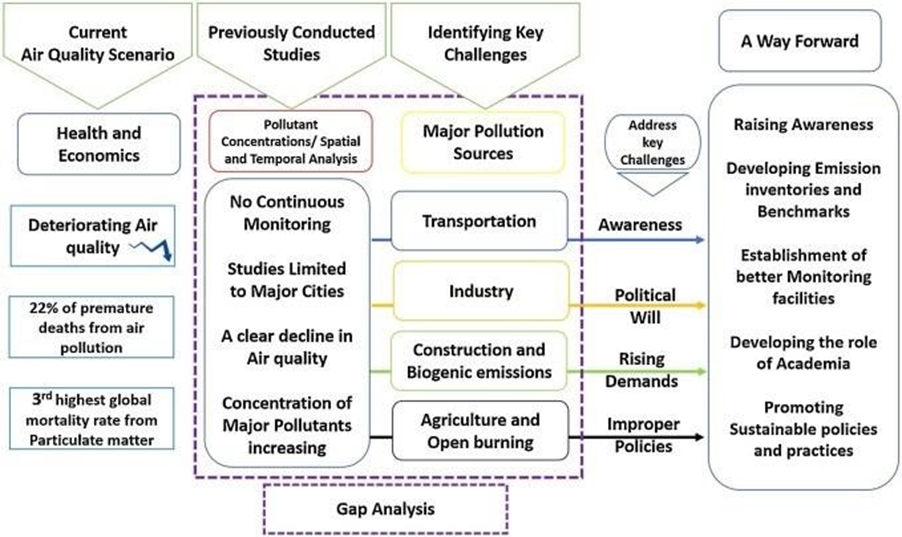
From November to February, there were major positive patterns in PM1, PM2.5, PM10, NO2, and SO2, especially at Lhr, Isb, Gujranwala, and Fsd. The greatest levels of PMx and trace gases were found in the winter months of Oct-Feb, when atmosphere is stable and the borderline is shallow, and discharges from man-made events and biomass burning are greater than in other times. This study's findings are consistent with previous research findings (Lalchandani et al., 2021). The number of pollutants is dramatically rising due to large-scale industrial and transportation operations. Due to NO2, PM2.5, and PM10 emissions, poor air quality is found in regions with considerable traffic. The primary sources of PM2.5 were recognized as traffic and road dust re-suspension, burning of coal, vehicle discharges, biomass combusting, and 2ndry aerosols generation (Ahmad et al., 2021), as shown in the figure (10) below.
Conclusion
Pollution and Environmental degradation are a big problem all over the world. Anthropogenic activities are the reason for the production of pollutants into the environment. Many adverse effects have been also observed in Pakistan because of soil pollutants, water pollutants, noise pollutants, and air pollutants on human diversity. The air pollution and noise pollution is seemed to be highest in Punjab as compared to other provinces of Pakistan because of heavy traffic. While soil and water pollution are also seemed to be highest in Punjab because of industrial pollutants. Thus, in order to overcome the disaster of pollution different measurements should be taken into account to save the biosphere of Pakistan which includes raising the awareness, the development of role of academia, development of sustainable policies and practices.
References
- Payton, Erica, Jagdish Khubchandani, Amy Thompson, and James H. Price. "Parents’ expectations of high schools in firearm violence prevention." Journal of community health 42 (2017): 1118-1126.
- Khan, Adnan, and Viqar Husaın. "Groundwater arsenic con- tamination and its health impacts in Tando Muhammad Khan District, Sindh, Pakistan." International Journal of Earth Sci- ences Knowledge and Applications 3, no. 3 (2021): 263-272.
- Ahmad, Mushtaq, Qing Yu, Jing Chen, Siming Cheng, Weihua Qin, and Yuepeng Zhang. "Chemical characteristics, oxidative potential, and sources of PM2. 5 in wintertime in Lahore and Peshawar, Pakistan." Journal of environmental sciences 102 (2021): 148-158.
- Ain, Quratul, Raza Ullah, Muhammad Asif Kamran, and Farhad Zulfiqar. "Air pollution and its economic impacts at household level: Willingness to pay for environmental services in Paki- stan." Environmental Science and Pollution Research 28, no. 6 (2021): 6611-6618.
- Akhtar, Malik Muhammad, Abida Dost Mohammad, Muhsan Ehsan, Rabia Akhtar, Jalil ur Rehman, and Zaira Manzoor. "Water resources of Balochistan, Pakistan—a review." Arabian Journal of Geosciences 14 (2021): 1-16.
- Akmal, Tanzila, and Faisal Jamil. "Assessing health damages from improper disposal of solid waste in metropolitan Islam- abad–Rawalpindi, Pakistan." Sustainability 13, no. 5 (2021): 2717.
- Ali, Q., A. Raza, S. Saghir, and M. T. I. Khan. "Impact of wind speed and air pollution on COVID-19 transmission in Pakistan." International Journal of Environmental Science and Technolo- gy 18 (2021): 1287-1298.
- Al-Taai, Suaad Hadi Hassan. "WITHDRAWN: Noise and its im- pact on environmental pollution." (2021).
- Amin, Sidra, Amber R. Solangi, Dilawar Hassan, Nadir Hus- sain, Jamil Ahmed, and Hadi Baksh. "Recent trends in devel- opment of nanomaterials based green analytical methods for environmental remediation." Current Analytical Chemistry 17, no. 4 (2021): 438-448.
- Anjum, Muhammad Shehzaib, Syeda Mahnoor Ali, Muham- mad Ahmed Subhani, Muhammad Naveed Anwar, Abdul-Sat- tar Nizami, Umar Ashraf, and Muhammad Fahim Khokhar. "An emerged challenge of air pollution and ever-increasing particu- late matter in Pakistan; a critical review." Journal of Hazardous Materials 402 (2021): 123943.
- Aslam, Bilal, Shabnam Gul, and Muhammad Faizan Asghar. "Evaluation of environmental degradation as an unprecedent- ed threat to human security in Pakistan." Liberal Arts and So- cial Sciences International Journal (LASSIJ) 5, no. 1 (2021): 197-211.
- Bhatti, Zahid Imran, Muhammad Ishtiaq, Said Akbar Khan, Javed Nawab, Junaid Ghani, Zahid Ullah, Sardar Khan et al. "Contamination level, source identification and health risk as- sessment of potentially toxic elements in drinking water sourc- es of mining and non-mining areas of Khyber Pakhtunkhwa, Pakistan." Journal of water and health 20, no. 9 (2022): 1343- 1363.
- Bilal, Muhammad, Alaa Mhawish, Janet E. Nichol, Zhongfeng Qiu, Majid Nazeer, Md Arfan Ali, Gerrit de Leeuw et al. "Air pollution scenario over Pakistan: Characterization and ranking of extremely polluted cities using long-term concentrations of aerosols and trace gases." Remote Sensing of Environment 264 (2021): 112617.
- Chen, Fanglin, and Zhongfei Chen. "Cost of economic growth: Air pollution and health expenditure." Science of the Total En- vironment 755 (2021): 142543.
- Chhachhar, Abdul Razaque, Ghulam Shabir Arain, and Dastar Ali Chandio. "Assessing print media coverage on environmen- tal issues in Pakistan: A study of major newspapers in Paki- stan." Progressive Research Journal of Arts & Humanities (PR- JAH) 2, no. 2 (2020): 92-103.
- Cicala, Steve, Stephen P. Holland, Erin T. Mansur, Nicholas Z. Muller, and Andrew J. Yates. "Expected health effects of re- duced air pollution from COVID-19 social distancing." Atmo- sphere 12, no. 8 (2021): 951.
- Dave, Pragnesh N., Shalini Chaturvedi, and Lokesh Kumar Sahu. "Impact of polychlorinated biphenyls on environment and public health." In Handbook of Advanced Approaches to- wards Pollution Prevention and Control, pp. 261-280. Elsevier, 2021.
- El-Hamid, Hazem T. Abd, Wei Caiyong, and Zhang Yongting. "Geospatial analysis of land use driving force in coal mining area: Case study in Ningdong, China." GeoJournal 86, no. 2 (2021): 605-620.
- Farooqi, Z. U. R., Ahmad, I., Zeeshan, N., Ilić, P., Imran, M., & Saeed, M. F. (2021). Urban noise assessment and its nonaudi- tory health effects on the residents of Chiniot and Jhang, Pun- jab, Pakistan. Environmental Science and Pollution Research, 1-13.
- Jehan, Shah, Said Muhammad, Wajid Ali, and Mian Luqman Hussain. "Potential risks assessment of heavy metal (loid) s contaminated vegetables in Pakistan: a review." Geocarto In- ternational 37, no. 24 (2022): 7287-7302.
- Iqbal, Isma Younes Anum, Abdul Ghaffar, Anum Liaqut, and Ammara Shahid. "Impact Assessment of Orange Line Train during Construction Phase in Lahore Using ‘R'." Journal of the Research Society of Pakistan 58, no. 2 (2021): 195.
- Islam, Md Saiful, Tapos Kormoker, Mohini Mazumder, Suraia Easnur Anika, Md Towhidul Islam, Debolina Halder Hemy, Um- mah Salma Mimi, Ram Proshad, Md Humayun Kabir, and Abu- bakr M. Idris. "Trace elements concentration in soil and plant within the vicinity of abandoned tanning sites in Bangladesh: an integrated chemometric approach for health risk assess- ment." Toxin reviews 41, no. 3 (2022): 752-767.
- Khan, Yasir Karim, Muhammad Toqeer, and Munir H. Shah. "Spatial distribution, pollution characterization and health risk assessment of selected metals in groundwater of Lahore, Pa- kistan." Geochemistry 81, no. 1 (2021): 125692.
- Lalchandani, Vipul, Varun Kumar, Anna Tobler, Navaneeth M. Thamban, Suneeti Mishra, Jay G. Slowik, Deepika Bhattu et al. "Real-time characterization and source apportionment of fine particulate matter in the Delhi megacity area during late winter." Science of the total environment 770 (2021): 145324.
- Levac, Danielle, Stephanie MN Glegg, Heidi Sveistrup, Heath- er Colquhoun, Patricia A. Miller, Hillel Finestone, Vincent De- Paul, Jocelyn E. Harris, and Diana Velikonja. "A knowledge translation intervention to enhance clinical application of a virtual reality system in stroke rehabilitation." BMC health ser- vices research 16 (2016): 1-11.
- Sadiq, Misbah. "Policing in pandemic: is perception of work- load causing work–family conflict, job dissatisfaction and job stress?." Journal of Public Affairs 22, no. 2 (2022): e2486.
- Masood, Noshin, Shehla Batool, and Abida Farooqi. "Ground- water pollution in Pakistan." In Global groundwater, pp. 309- 322. Elsevier, 2021.
- Mehmood, Yasir, Muhammad Arshad, Harald Kaechele, Nasir Mahmood, and Rong Kong. "Pesticide residues, health risks, and vegetable farmers’ risk perceptions in Punjab, Pakistan." Human and Ecological Risk Assessment: An International Journal 27, no. 3 (2021): 846-864.
- Munir, S., Khan, S., Nazneen, S., & Ahmad, S. S. (2021). Tem- poral and seasonal variations of noise pollution in urban zones: a case study in Pakistan. Environmental Science and Pollution Research, 1-9.
- Münzel, Thomas, Mette Sørensen, and Andreas Daiber. "Transportation noise pollution and cardiovascular disease." Nature Reviews Cardiology 18, no. 9 (2021): 619-636.
- Parvaiz, Ambreen, Junaid Ali Khattak, Ishteaqe Hussain, Noshin Masood, Tariq Javed, and Abida Farooqi. "Salinity en- richment, sources and its contribution to elevated groundwater arsenic and fluoride levels in Rachna Doab, Punjab Pakistan: Stable isotope (δ2H and δ18O) approach as an evidence." En- vironmental Pollution 268 (2021): 115710.
- Pienkowski, Martin. "Loud music and leisure noise is a com- mon cause of chronic hearing loss, tinnitus and hyperacusis." International journal of environmental research and public health 18, no. 8 (2021): 4236.
- Saeed, muhammad arif, and dr kashif mahmood. "spatial pat- terns of noise pollution in faisalabad city."
- Sardar, Muhammad Fahad, Bilawal Abbasi, Chang-xiong Zhu, Muhammad Zia-ur-Rehman, Ayesha Abdul Qadir, Hamaad Raza Ahmad, Sulman Siddique et al. "A review of veterinary antibiotic pollution in the agro-environment of Pakistan: alarm bells are ringing." (2021): 795-804.
- Shareef, Akhtar, and D. Rais Hashmi. "Perception and evalua- tion of noise tempted health hazards and risk assessment from portable power generators usage in the resident of Karachi." Pakistan. Journal of Health and Environmental Research 7, no. 1 (2021): 6-12.
- Soomro, A. H., Jatoi, W. B., Maitlo, A. A., Memon, A. F., & Bha- yo, M. S. (2021). Assessment of heavy metal content of com- monly consumed herbal medicines in Sindh, Pakistan. Envi- ronmental Science and Pollution Research, 1-10.
- Sulis, Giorgia, Sena Sayood, and Sumanth Gandra. "Antimi- crobial resistance in low-and middle-income countries: current status and future directions." Expert review of anti-infective therapy 20, no. 2 (2022): 147-160.
- Tainio, Marko, Zorana Jovanovic Andersen, Mark J. Nieuwen- huijsen, Liang Hu, Audrey De Nazelle, Ruopeng An, Leandro MT Garcia et al. "Air pollution, physical activity and health: A mapping review of the evidence." Environment international 147 (2021): 105954.
- Taufeeq, Ammara, Mujtaba Baqar, Faiza Sharif, Mehvish Mum- taz, Sami Ullah, Sadia Aslam, Abdul Qadir, Muzaffar Majid, and Huang Jun. "Assessment of organochlorine pesticides and health risk in tobacco farming associated with River Barandu of Pakistan." Environmental Science and Pollution Research 28 (2021): 38774-38791.
- Younes, Isma, Anum Iqbal, Abdul Ghaffar, Anum Liaqut, and Ammara Shahid. "Impact Assessment of Orange Line Train during Construction Phase in Lahore Using ‘R’." Journal of the Research Society of Pakistan 58, no. 2 (2021).
- Zainab, Syeda Maria, Muhammad Junaid, Muhammad Yasir Abdur Rehman, Ming Lv, Linxia Yue, Nan Xu, and Riffat Na- seem Malik. "First insight into the occurrence, spatial distribu- tion, sources, and risks assessment of antibiotics in groundwa- ter from major urban-rural settings of Pakistan." Science of the Total Environment 791 (2021): 148298.
- Zulfiqar, F., and G. B. Thapa. "The Effect of Cotton Manage- ment Practices on Water Use Efficiency and Water Security Challenges in Pakistan." Water Security in Asia: Opportunities and Challenges in the Context of Climate Change (2021): 557- 566.